
 Image 1 of 5
 Image 2 of 5
 Image 3 of 5
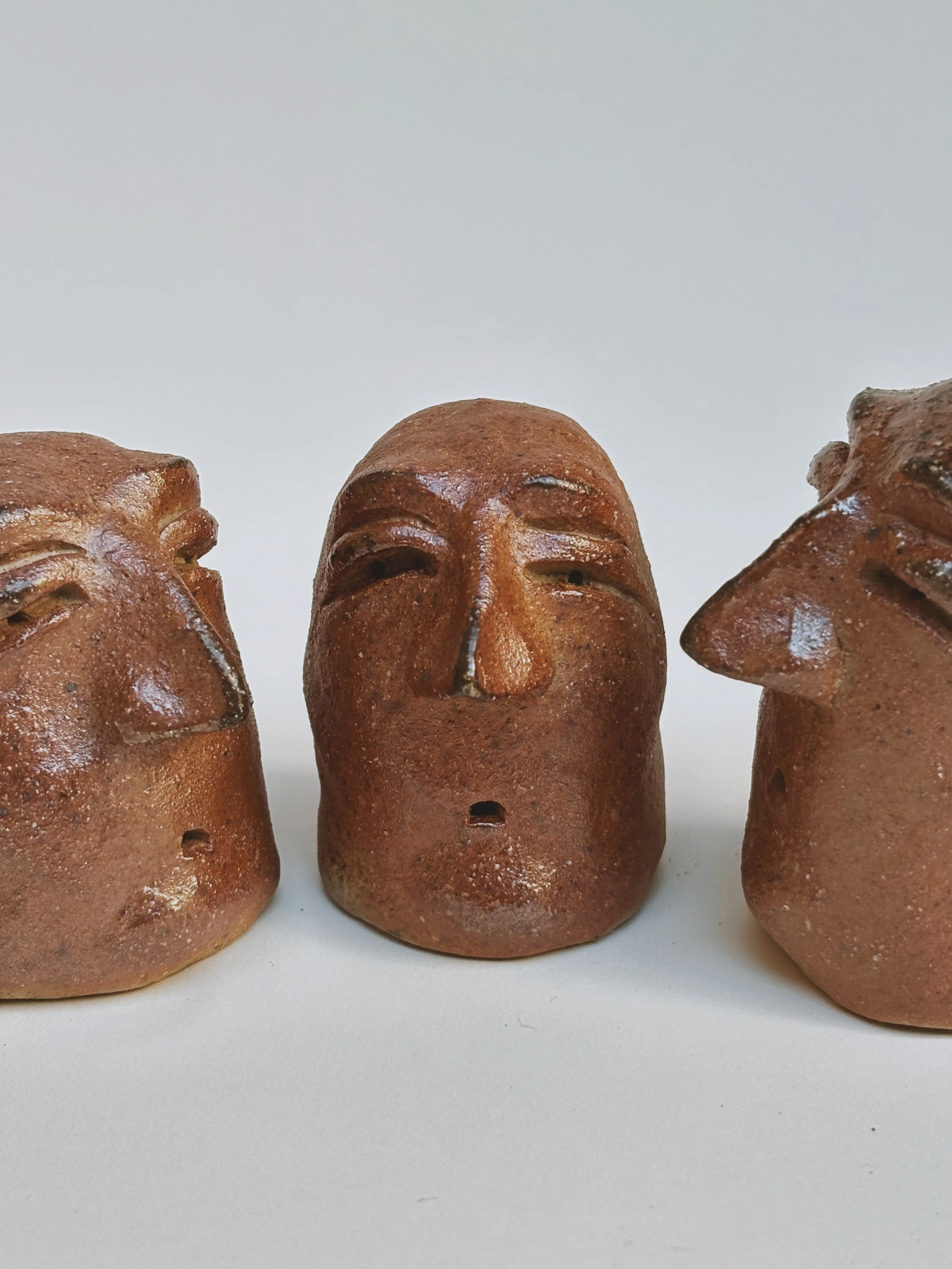 Image 4 of 5
 Image 5 of 5
By Regina Torres Thompson
Unique
Cittavṛtti is a Sanskrit term used in yoga philosophy to refer to the fluctuations of the mind: citta refers to the mind or ordinary awareness, while vṛtti refers to its movements or activities.
It is a key principle in the Yoga Sūtras of Patañjali. Cittavṛtti encompasses the movements of thought, perception, memory and imagination through which we experience and interpret the world. The first chapter explores the relationship between these mental activities and our identification with them. The three heads give physical form to this multiplicity of mental activity, representing the inner voices through which we construct our experience of reality.
This piece was made from stoneware clay and fired in a wood-fired kiln. It is unglazed; its surface is formed by the marks left by wood ash travelling through the kiln.