
 Image 1 of 1
By Elham Hemmat
Edition of 3
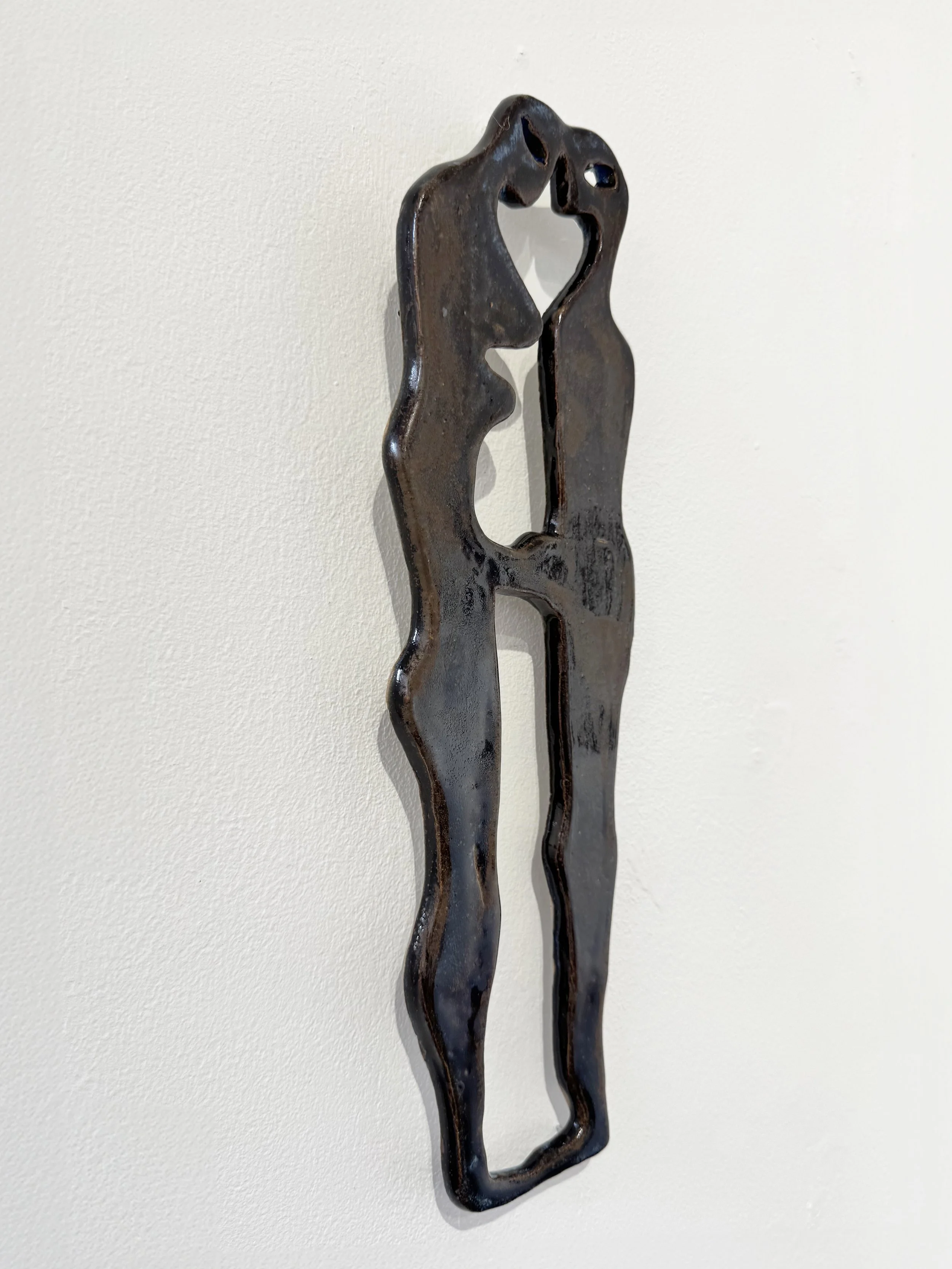
Two figures stand face to face, almost touching. At first they appear to be two people, a man and a woman, but I created them as two aspects of the same self.
This work grew from my interest in Carl Jung’s ideas of anima and animus, traditionally described as the inner feminine and masculine dimensions of the psyche. What interested me was not the idea of dividing ourselves into male and female, but the possibility that we carry qualities within us that may contradict the identity we consciously recognise as our own.
I wanted the figures to feel as though they are meeting each other, but also meeting themselves.
Their bodies are separate, yet they connect and form a single structure. Neither figure can be removed without changing the other. For me, this closeness represents the process of recognising something within ourselves that may initially feel unfamiliar, something we might first encounter through another person before understanding that it also belongs to us.
There is an intimacy in that encounter, but also tension. Knowing ourselves is not always comfortable. We may be drawn towards certain qualities while rejecting others. We may spend years developing one side of ourselves while leaving another unexplored.
This is where the work connects to the Shadow. The parts we do not recognise or allow ourselves to express do not simply disappear. They remain present, sometimes emerging through attraction, relationships, dreams, emotions or the qualities we notice most strongly in other people.
The empty space between the two figures is as important as their physical connection. They come together without completely dissolving into one another. They remain two forms and, at the same time, create one.
When light reaches the ceramic, their shadows overlap on the wall and that separation becomes even less certain.
For me, the work is about meeting the other within ourselves, and recognising that becoming more whole may require us to embrace parts of ourselves we once believed belonged to someone else.