
 Image 1 of 4
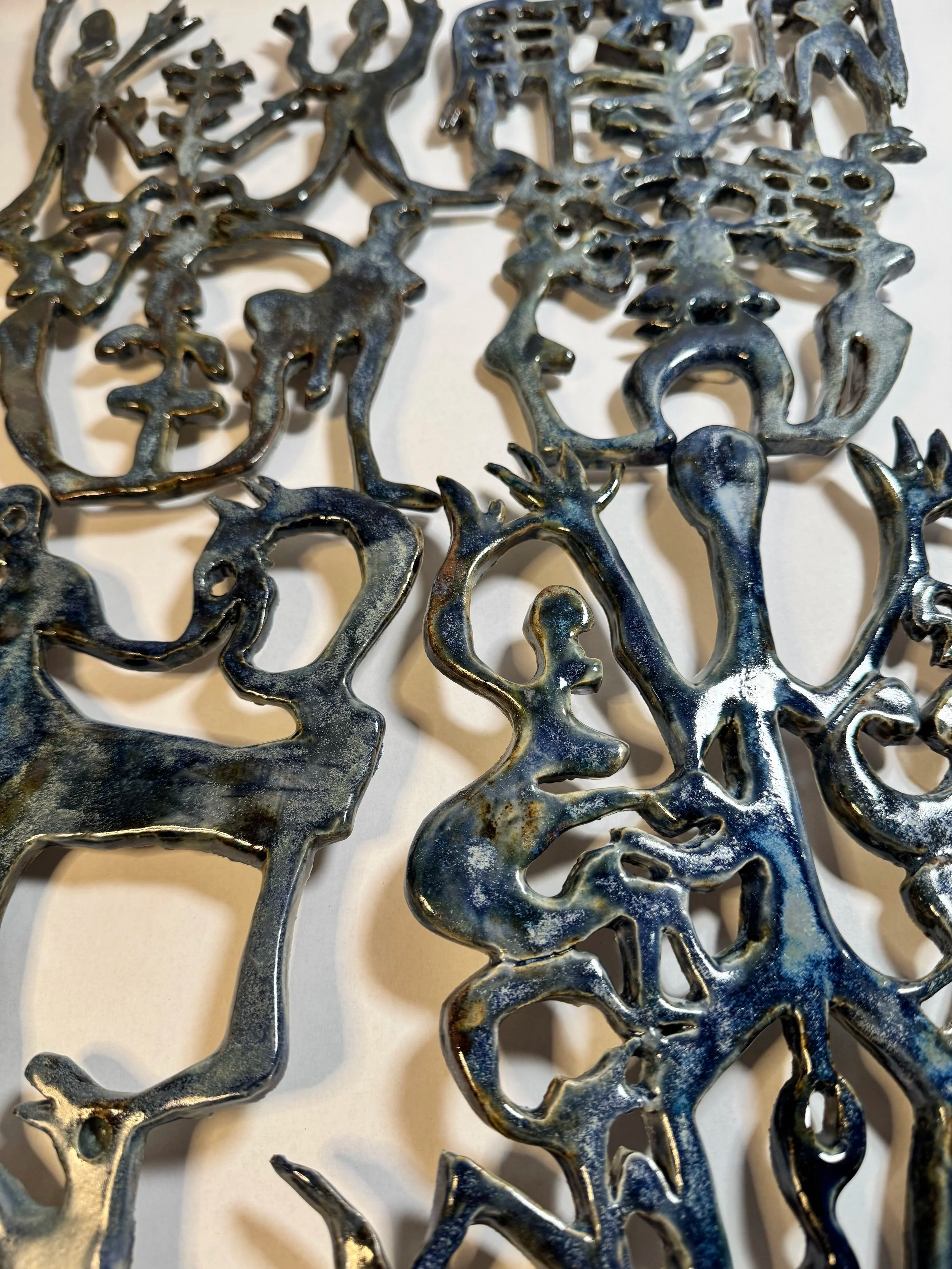 Image 2 of 4
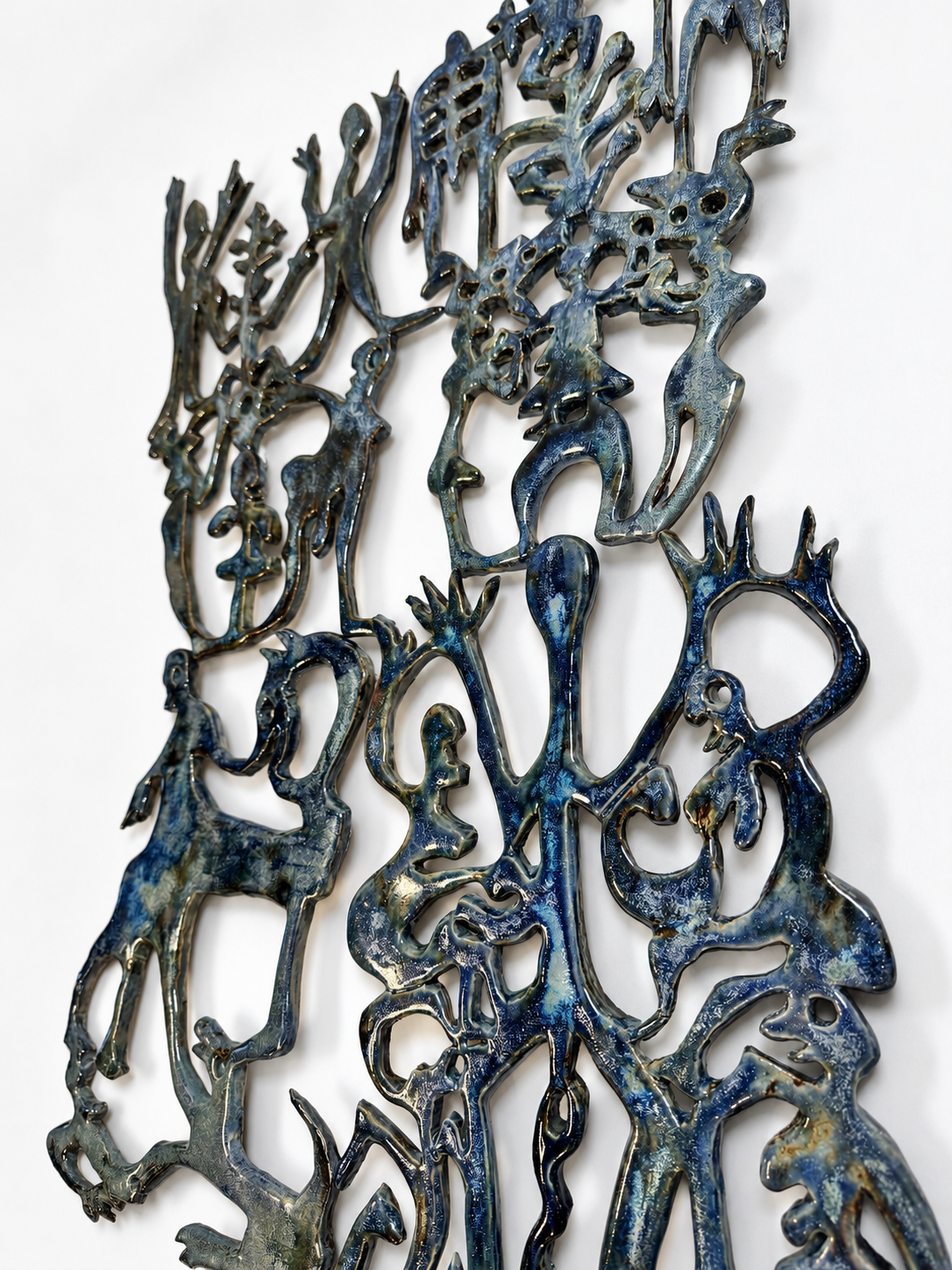 Image 3 of 4
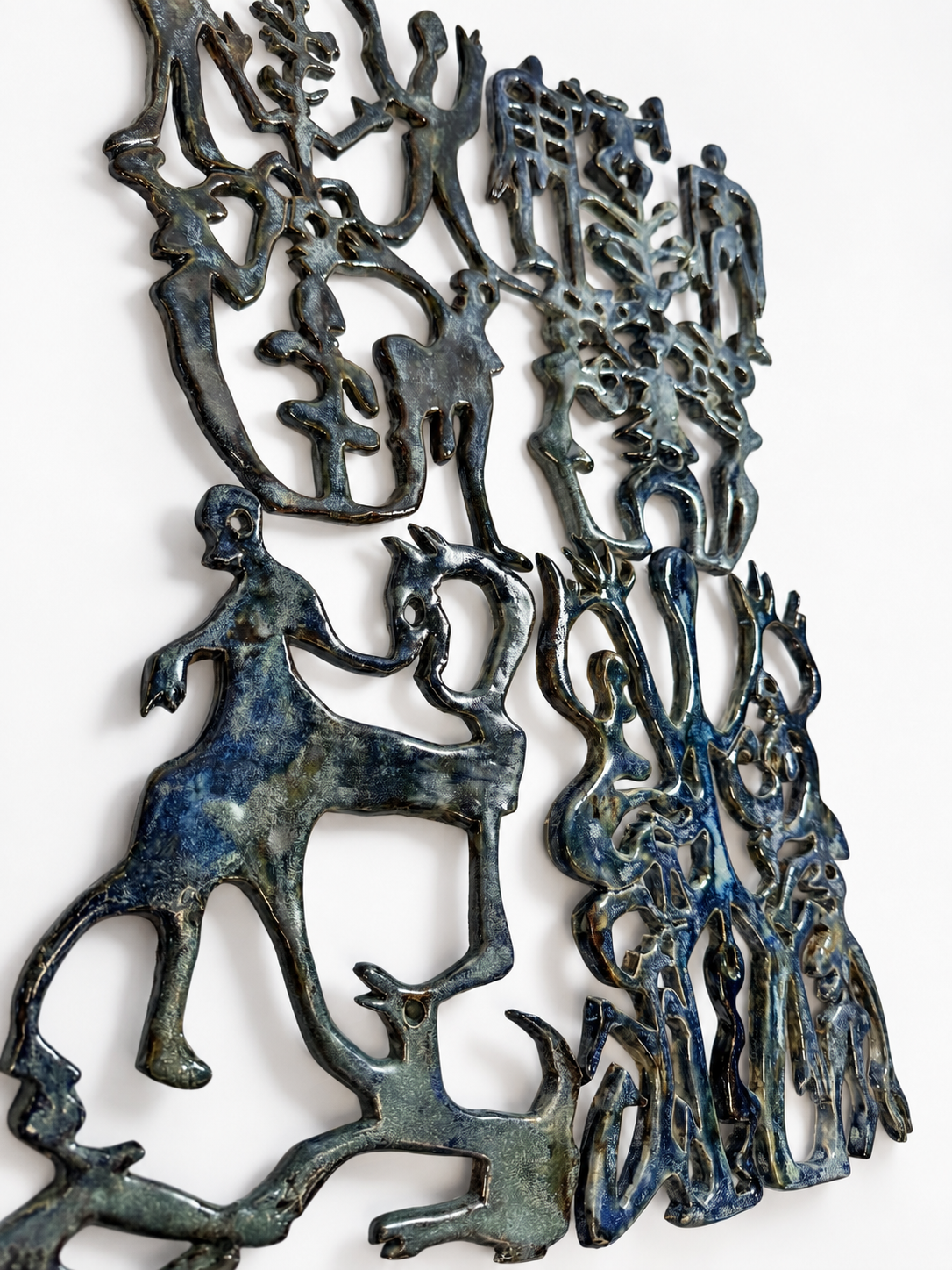 Image 4 of 4
By Elham Hemmat
Unique
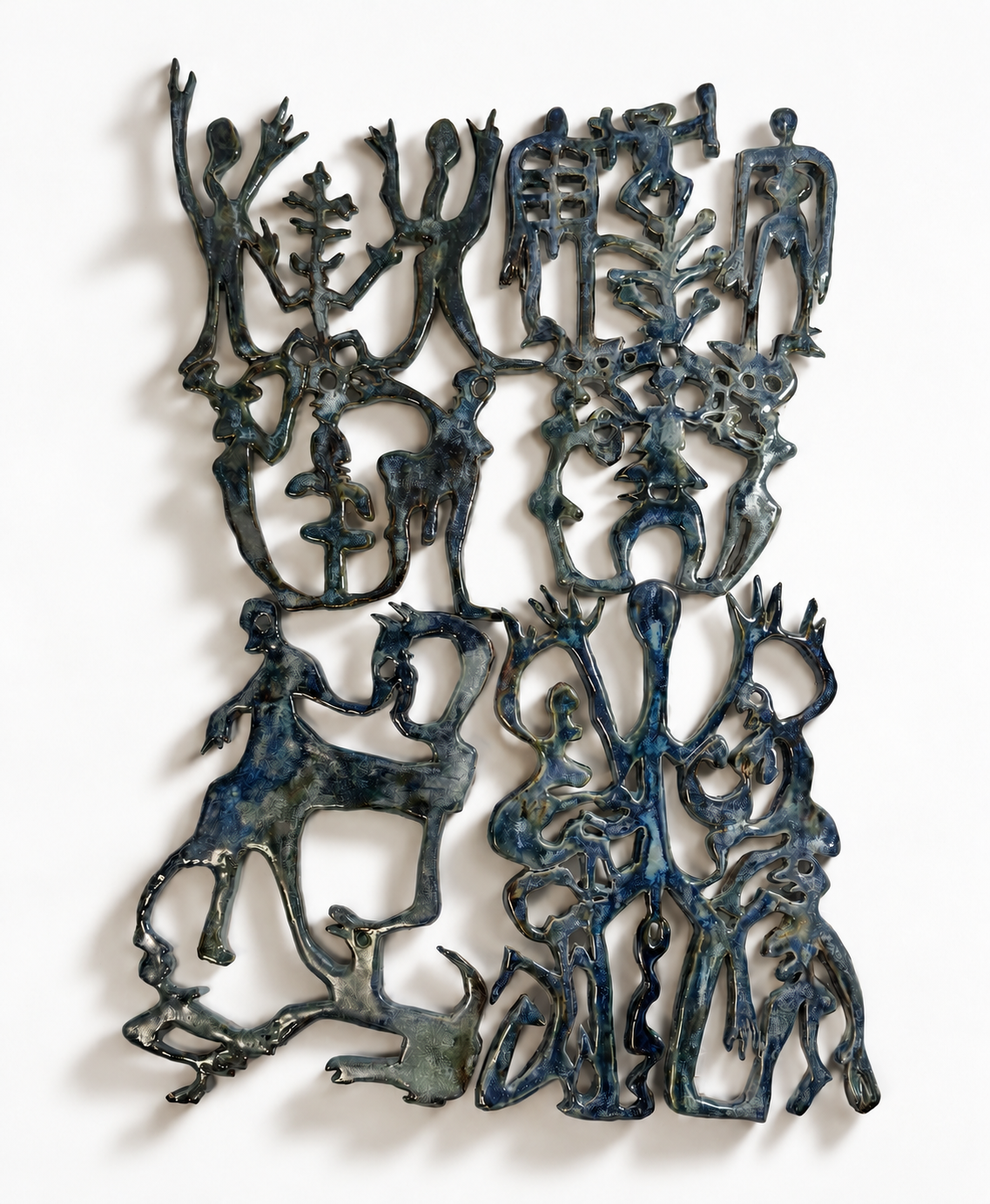
‘This work is part of my Shadows series, which explores hidden aspects of human identity through mythology, the body and Carl Jung's idea of the Shadow.
The work brings together human, animal and hybrid figures within one interconnected structure. Some forms are immediately recognisable, while others are difficult to identify. A body becomes an animal, a figure grows into something tree-like, and separate forms begin to merge. I wanted it to feel as though many different stories, identities and states of being exist at the same time.
Mythological and ancient imagery has always interested me because similar forms appear across different cultures and periods: humans transforming into animals, hybrid creatures, sacred trees and bodies existing somewhere between the human and the supernatural. I don't use these images to illustrate one particular myth. Instead, I combine and transform them to create my own visual language.
This connects with Jung's idea of the collective unconscious and his belief that certain archetypal images can appear repeatedly in human stories, myths and dreams. In this work, the figures seem to emerge from one another, as though they belong to a shared psychological landscape rather than separate narratives.
The empty spaces are as important as the ceramic forms themselves. When the work is installed slightly away from the wall, light passes through it and creates another composition made from shadows. Figures overlap, disappear and reappear as the light changes.
For me, this changing shadow reflects the psychological Shadow itself: something that remains part of us even when we cannot see or fully understand it.’ - Hemmat