
 Image 1 of 3
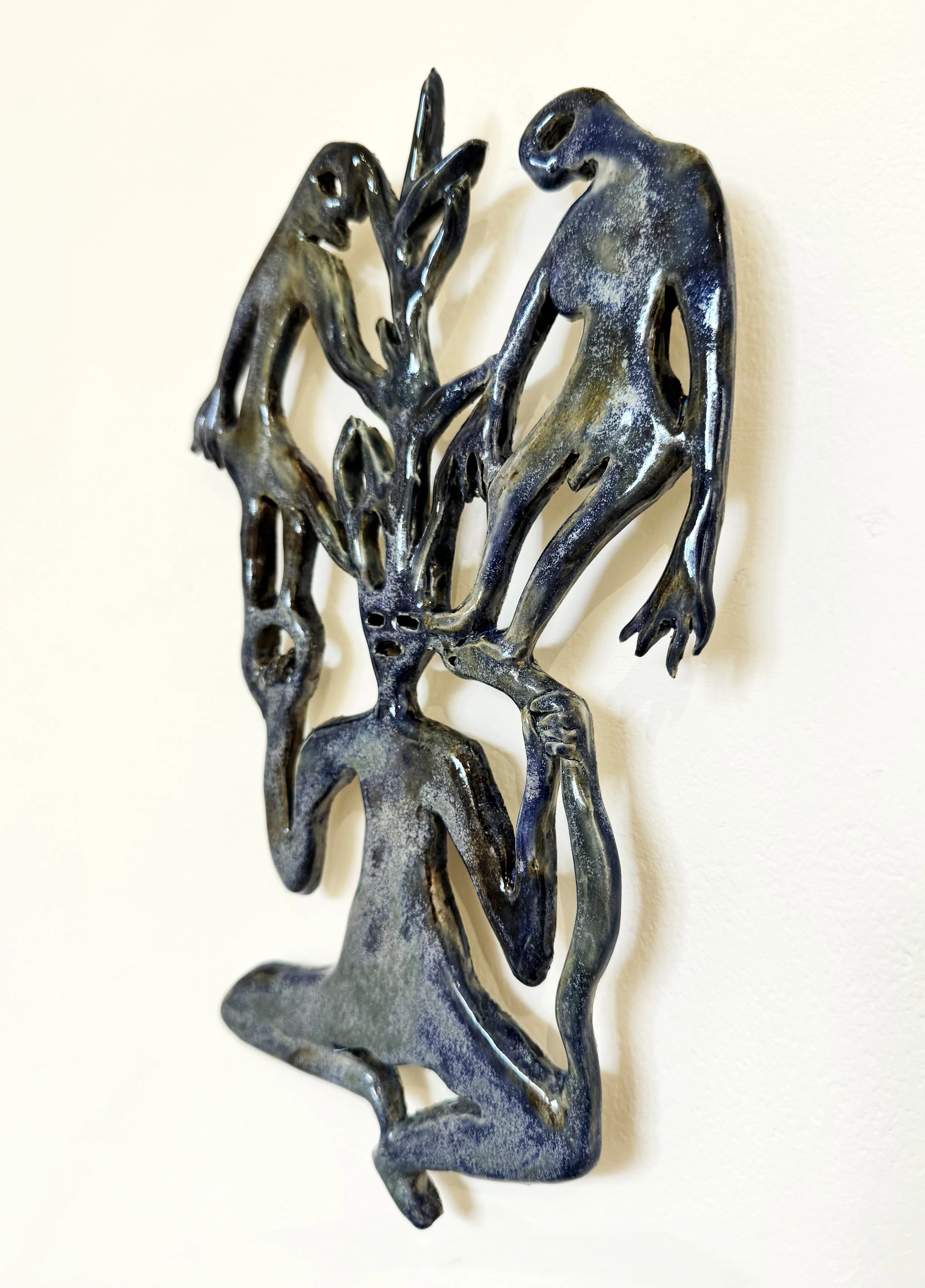 Image 2 of 3
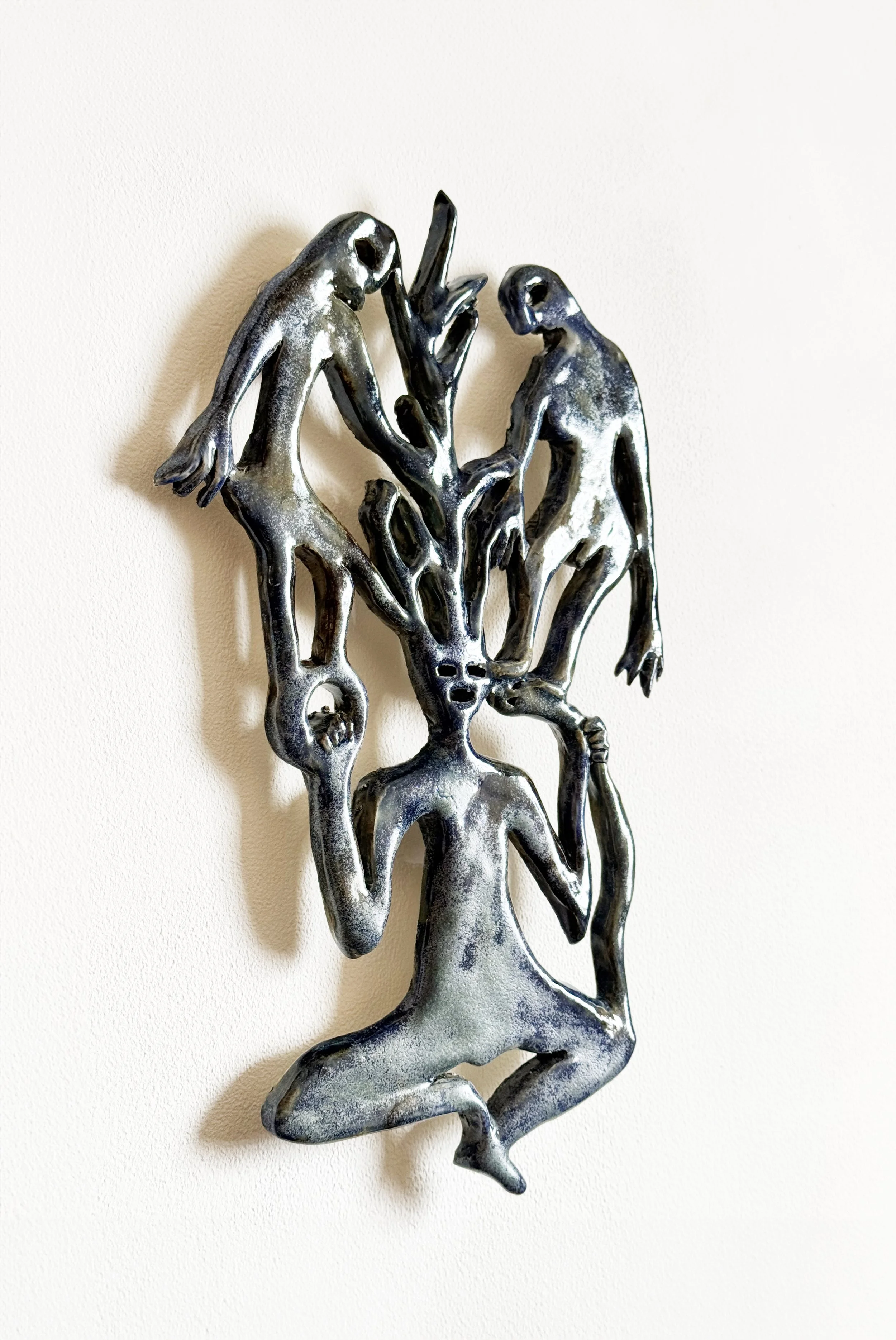 Image 3 of 3
By Elham Hemmat
Unique
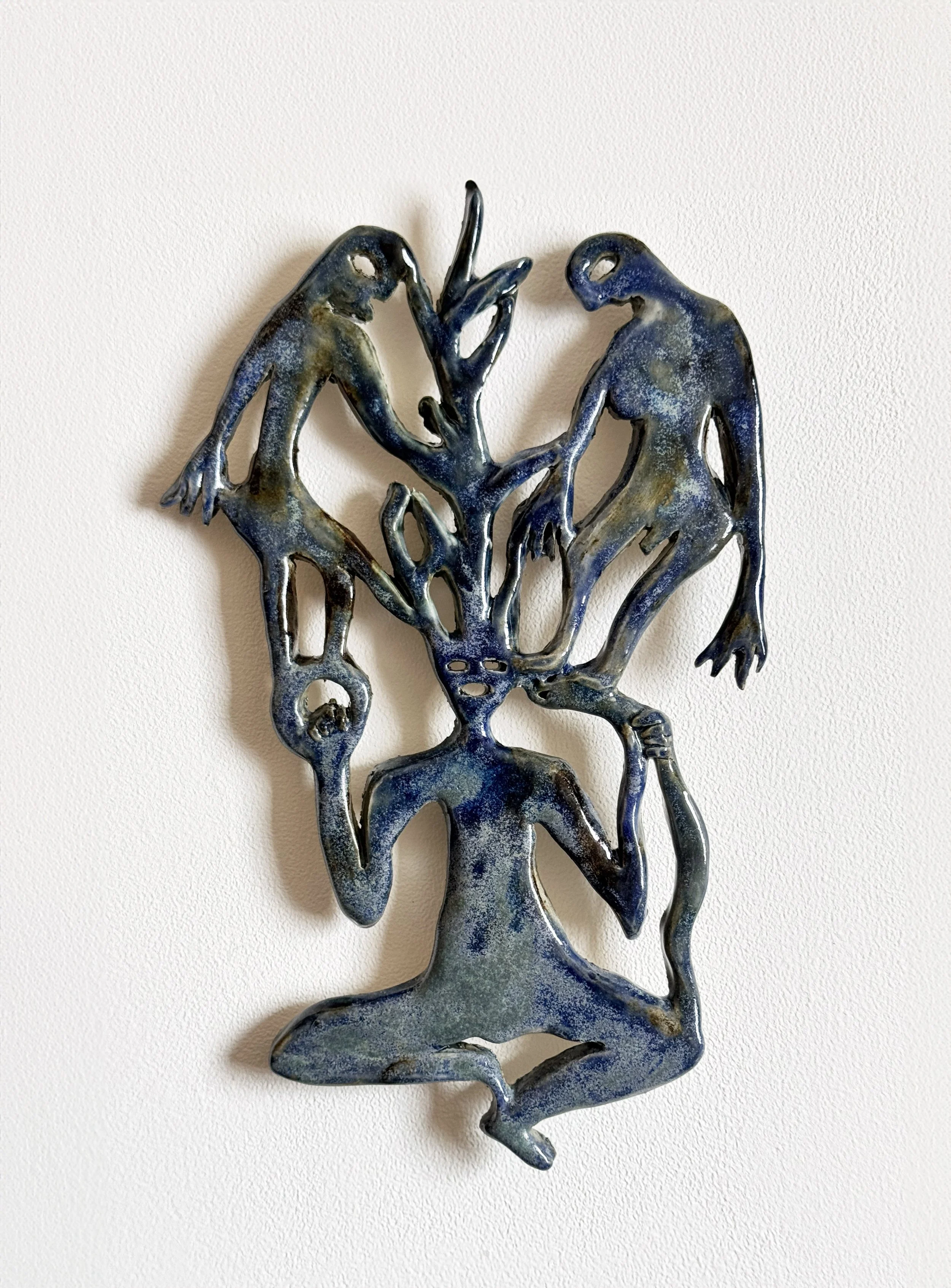
‘A figure sits quietly. In one hand it holds a snake, in the other a circular form. From its head, something begins to grow. It becomes a tree, branching outward, carrying a man and a woman within it.
I imagined this figure as someone sitting with everything that exists inside them. The image grew from my fascination with mythology, where the boundaries between human beings, animals and nature are often fluid. A person can become an animal, a tree can carry human meaning, and a snake can be both threatening and transformative. These ancient images interest me because they seem to speak about experiences we still struggle to put into words.
The snake is particularly important to me. It carries contradictions. It can suggest fear and danger, but also transformation, renewal and the shedding of an old skin. I think about this in relation to ourselves and how difficult it can be to let an old version of who we are disappear.
The tree growing from the figure’s head became, for me, a kind of inner landscape. Its branches divide and move in different directions, yet they all grow from the same place. The man and woman within it are not separate characters. I see them as different possibilities within one person, different energies and different versions of the self. This is where mythology began to connect with my reading of Carl Jung and his idea of the Shadow. Jung was interested in the parts of ourselves that remain outside the identity we consciously recognise, and in the way myths and archetypal images can bring these hidden parts into view.
I began thinking about my own life and how easily we describe ourselves through external things: our name, profession, relationships, achievements, where we come from, what we have or have not accomplished.
But if all of those descriptions disappeared, who would be left?
For me, the seated figure holds that question. It is surrounded by different parts of itself, including something instinctive in the snake, something growing in the tree, and different identities within its branches. Yet it is not trying to escape any of them. It is simply sitting there, with itself.’ -Hemmat